
Choosing to hire a professional for a contractor renovation project marks the difference between a stressful, costly mistake and a transformative home improvement that adds value and function. Whether you're planning a kitchen overhaul, bathroom refresh, or whole-home transformation, understanding how to select, work with, and manage a licensed contractor ensures your investment delivers the results you envision. This comprehensive guide walks you through every critical decision, from initial planning and budgeting to final inspections and warranty protection.
Understanding the Contractor Renovation Process
A contractor renovation differs fundamentally from DIY projects in scope, complexity, and legal requirements. Professional contractors bring licensing, insurance, specialized skills, and access to trade professionals that most homeowners lack.
What Sets Professional Renovation Apart
Licensed contractors operate under state and local regulations that protect homeowners from substandard work and financial loss. In Pennsylvania, contractors must carry specific insurance coverage and maintain valid licensing for the types of work they perform. This framework creates accountability throughout your project.
The National Association of Home Builders provides detailed guidance on what to verify before signing any renovation contract. These industry standards help homeowners distinguish between qualified professionals and unlicensed operators.
Key advantages of hiring licensed contractors include:
- Proper permit acquisition and code compliance
- Access to wholesale material pricing
- Coordination of specialized subcontractors
- Project management and timeline control
- Warranty protection on labor and materials
- Insurance coverage for property damage and injuries
Common Renovation Project Types
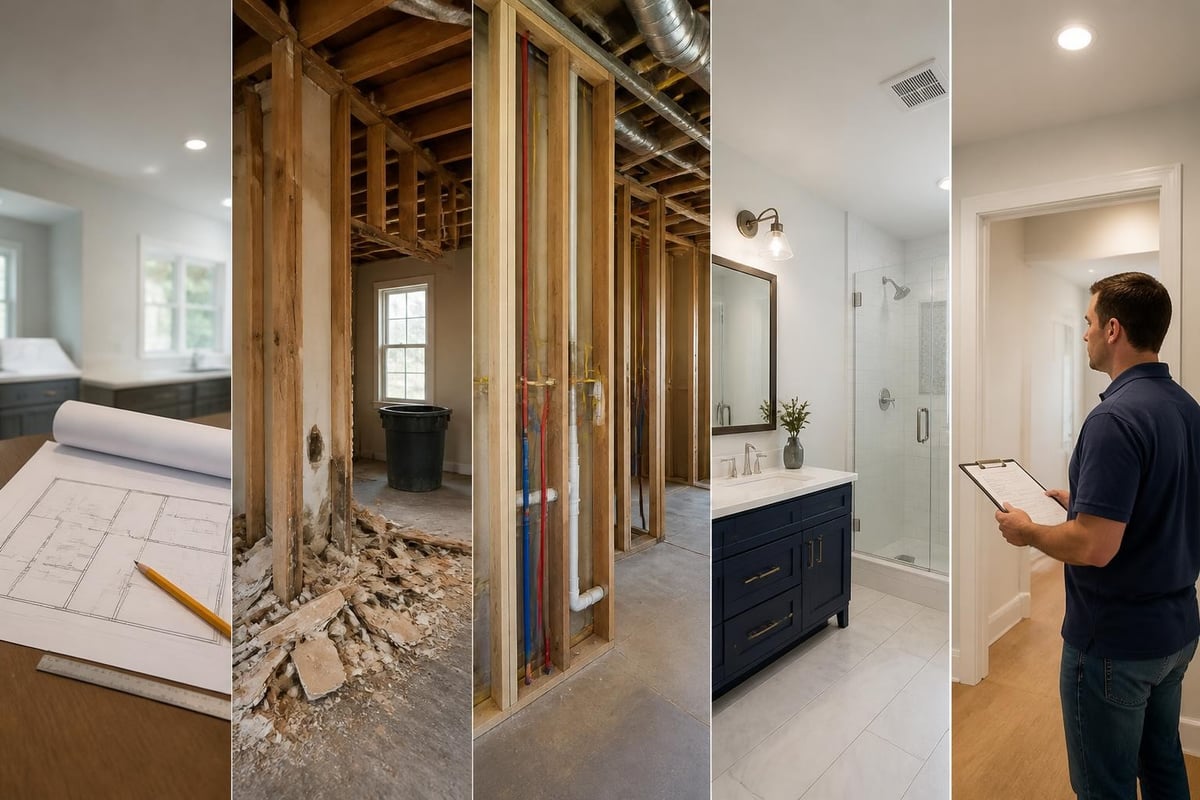
Contractor renovation projects vary widely in scale and complexity. Understanding where your project fits helps set realistic expectations for budget, timeline, and disruption.
| Project Type | Typical Duration | Complexity Level | Permit Requirements |
|---|---|---|---|
| Kitchen Remodel | 4-8 weeks | High | Electrical, Plumbing, Structural |
| Bathroom Renovation | 2-4 weeks | Medium-High | Plumbing, Electrical |
| Home Addition | 3-6 months | Very High | Full Building Permits |
| Whole-Home Remodel | 3-8 months | Very High | Multiple Permits |
| Basement Conversion | 6-10 weeks | Medium | Electrical, Egress |
Budgeting Your Contractor Renovation
Financial planning determines whether your renovation succeeds or stalls midway through construction. Accurate budgeting requires understanding both visible costs and hidden expenses that emerge during most projects.
Breaking Down Renovation Costs
Professional contractors typically structure pricing around labor, materials, permits, and overhead. Labor often represents 40-50% of total project costs, while materials account for 30-40%. The remaining budget covers permits, inspections, project management, and contractor profit margins.
RSMeans cost data provides industry-standard pricing benchmarks that contractors use for estimating. These figures account for regional variations, material quality tiers, and current market conditions.
Budget allocation framework:
- Labor costs (40-50%): Skilled tradespeople, project manager time, specialized installers
- Materials (30-40%): Cabinets, fixtures, flooring, tiles, countertops, appliances
- Permits and fees (2-5%): Building permits, inspection fees, utility connection charges
- Contingency reserve (10-20%): Unexpected structural issues, change orders, material upgrades
Hidden Costs Homeowners Overlook
Every contractor renovation uncovers some surprises once walls open and existing systems become visible. Smart budgeting includes cushion for these inevitable discoveries.
Older Pittsburgh homes often reveal outdated electrical systems, deteriorating plumbing, or structural modifications that don't meet current code. Addressing these issues becomes non-negotiable once discovered. When working on homes built before 1978, EPA lead-safe work practices add testing and containment requirements that impact both cost and timeline.
Temporary housing or storage expenses accumulate during major renovations. Kitchen projects may require months of takeout meals and makeshift cooking arrangements. Bathroom renovations might necessitate gym memberships for shower access.
Selecting the Right Renovation Contractor
Contractor selection represents your single most important project decision. The right professional brings expertise, reliability, and problem-solving skills. The wrong choice creates stress, delays, cost overruns, and potentially unsafe or illegal work.
Verification and Due Diligence
Start by confirming licensing status through your state's licensing board. Pennsylvania requires contractors to maintain active licenses for specific trade categories. License numbers should appear on all estimates, contracts, and marketing materials.
Insurance verification protects you from liability if workers suffer injuries on your property. Request certificates of insurance showing both general liability and workers' compensation coverage. Contact the insurance carrier directly to confirm active policies.
Essential contractor verification steps:
- Confirm active state contractor license
- Verify general liability insurance ($1 million minimum)
- Check workers' compensation coverage
- Review Better Business Bureau ratings and complaint history
- Request and contact recent client references
- Examine photos of completed projects similar to yours
Interview Questions That Matter
Face-to-face meetings reveal communication style, professionalism, and whether you'll work well together through inevitable project challenges. The National Association of Realtors offers guidance on essential questions homeowners should ask during contractor interviews.
Ask about project management approach and who serves as your daily contact. Clarify whether the contractor handles all work directly or subcontracts portions. Understand the payment schedule and what triggers each draw request.
Discuss timeline expectations and what factors might cause delays. Request detailed information about warranty coverage on both labor and materials. Inquire about how change orders are handled and documented.

Contract Elements and Legal Protection
Written contracts transform verbal promises into legally enforceable agreements. Comprehensive contracts protect both homeowner and contractor by documenting every project detail, expectation, and contingency.
Must-Have Contract Components
Every contractor renovation agreement should specify exact work scope with detailed descriptions of materials, brands, models, and quality grades. Vague language like "quality fixtures" or "builder-grade materials" invites disputes.
Payment schedules should tie to project milestones, never front-loading contractor compensation. Industry-standard schedules often include a 10% deposit, with subsequent draws at 25%, 50%, 75%, and final payment at completion after final inspection.
| Contract Section | Required Details |
|---|---|
| Scope of Work | Specific tasks, room-by-room breakdown, exclusions |
| Materials Schedule | Brands, models, colors, quality grades, allowances |
| Payment Terms | Draw schedule, amount per phase, retention percentage |
| Timeline | Start date, substantial completion, final completion |
| Change Order Process | How modifications are requested, priced, approved |
| Warranty Terms | Labor warranty period, material warranties, exclusions |
Protecting Your Investment
Lien waivers prevent suppliers and subcontractors from placing claims against your property if the general contractor fails to pay them. Request conditional lien waivers with each payment, followed by unconditional waivers after payment clears.
Performance bonds and payment bonds offer additional protection on large projects. These instruments guarantee project completion even if your contractor defaults or goes bankrupt.
Navigating Permits and Code Compliance
Building permits aren't bureaucratic nuisance but rather consumer protection ensuring renovations meet minimum safety and structural standards. The International Residential Code establishes baseline requirements that local jurisdictions adapt for regional conditions.
When Permits Are Required
Pittsburgh and surrounding municipalities require permits for most contractor renovation work affecting structure, electrical systems, plumbing, HVAC, or building footprint. Even seemingly minor changes often trigger permit requirements.
Common permitted renovation work:
- Moving or removing walls (especially load-bearing)
- Electrical panel upgrades or circuit additions
- Plumbing relocations or new fixture installations
- HVAC system replacements or ductwork modifications
- Window or door replacements affecting structural openings
- Any work adding square footage to the home
The Inspection Process
Inspections occur at specific project phases, verifying work meets code before contractors conceal it behind walls and finishes. Rough-in inspections examine framing, electrical wiring, and plumbing before insulation and drywall. Final inspections confirm completed work matches approved plans.
Failed inspections delay projects while contractors correct deficiencies. This frustration actually protects homeowners from unsafe or substandard work that could cause future problems.
Managing Your Renovation Timeline
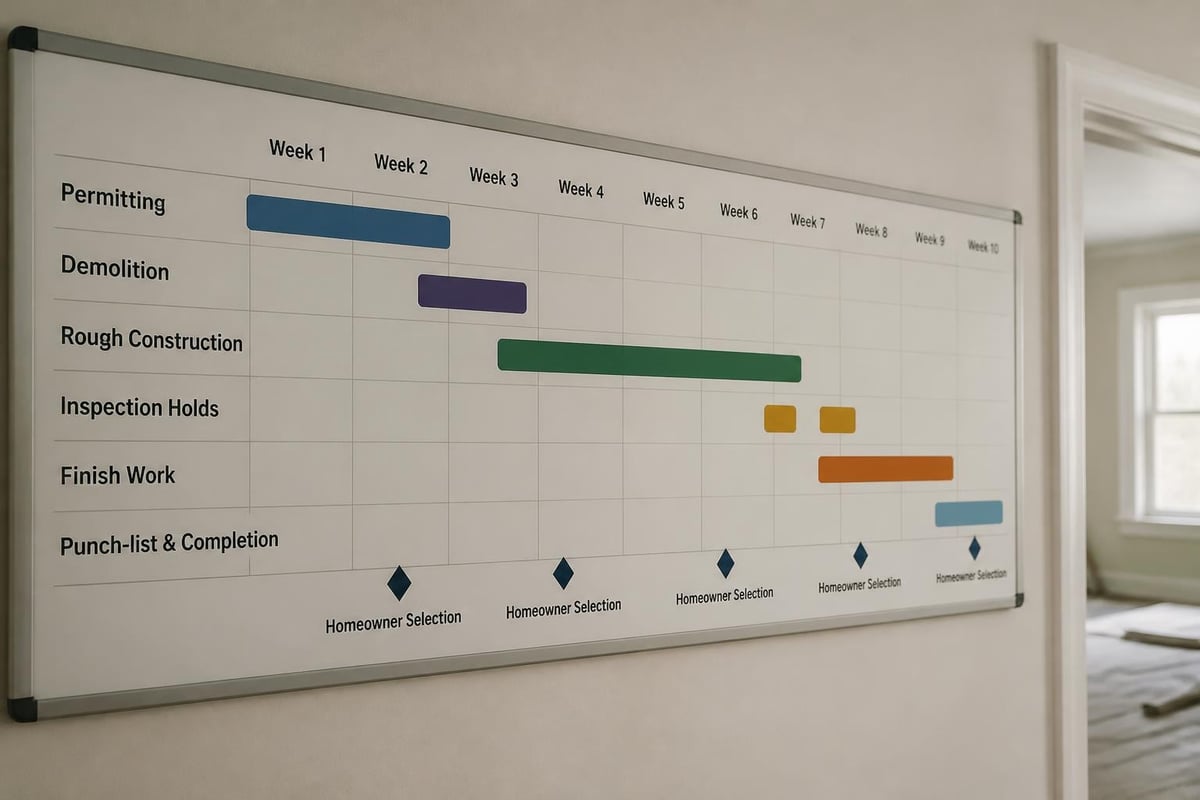
Realistic scheduling prevents frustration and helps coordinate the many moving parts of contractor renovation projects. Understanding typical durations and common delays sets appropriate expectations.
Realistic Duration Expectations
Kitchen remodeling projects involving layout changes, new cabinets, countertops, and appliances typically require 4-8 weeks from demolition to completion. Simple refreshes with existing layouts finish faster, while major reconfigurations extend timelines.
Lead times for custom materials significantly impact schedules. Custom cabinetry often requires 6-10 weeks from order to delivery. Natural stone countertops need templating after cabinet installation, then fabrication before installation. Specialty tiles, fixtures, and appliances may face backorders stretching weeks or months.
Factors affecting renovation timelines:
- Material lead times and availability
- Permit approval duration (1-4 weeks typical)
- Inspection scheduling and re-inspection needs
- Weather delays for exterior work
- Unforeseen structural or system issues
- Contractor scheduling across multiple projects
Staying On Schedule
Regular communication prevents small issues from becoming major delays. Establish weekly check-in meetings to review progress, address concerns, and make timely decisions on selections requiring homeowner approval.
Making selections early keeps contractors productive. Delays choosing tile, paint colors, or fixtures creates downtime where work stalls waiting for decisions. For whole-home remodeling projects, finalizing all selections before demolition prevents costly gaps in the construction sequence.
Working Effectively With Your Contractor
The homeowner-contractor relationship determines whether your renovation proceeds smoothly or deteriorates into conflict. Clear communication, reasonable expectations, and mutual respect create conditions for project success.
Communication Best Practices
Designate one primary contact on the homeowner side to prevent conflicting directions confusing the contractor. Similarly, know who represents the contractor for daily questions and concerns.
Document everything in writing. Follow up verbal conversations with email summaries confirming decisions, changes, or concerns. This record proves invaluable if disputes arise.
Respect contractors' time by consolidating questions rather than interrupting work repeatedly throughout the day. Schedule dedicated times for project updates and decision-making discussions.
Handling Changes and Challenges
Change orders document modifications to the original contract scope. They should detail exactly what's changing, the cost impact, and timeline effects. Never approve changes verbally without written documentation and updated contract amendments.
Problems emerge in every contractor renovation. How you and your contractor handle them reveals the relationship's strength. Address concerns promptly and professionally rather than letting frustrations build.
Financing Your Contractor Renovation
Most homeowners need financing beyond savings to fund substantial renovation projects. Multiple financing options exist, each with distinct advantages and limitations.
Renovation Financing Options
Home equity lines of credit (HELOCs) offer flexible borrowing against your home's equity with typically lower rates than personal loans. You draw funds as needed and pay interest only on borrowed amounts.
Cash-out refinancing replaces your existing mortgage with a larger loan, providing renovation funds as lump-sum cash. This works well when current interest rates are competitive with your existing mortgage rate.
The FHA 203(k) rehabilitation mortgage program combines home purchase and renovation financing in a single loan. This specialized program helps buyers purchase and improve properties simultaneously.
| Financing Type | Best For | Typical Rates | Approval Speed |
|---|---|---|---|
| HELOC | Flexible draws, ongoing projects | Variable, 7-9% | 2-4 weeks |
| Cash-Out Refinance | Large projects, low rates | Fixed, 6-8% | 3-6 weeks |
| FHA 203(k) | Purchase plus renovation | Fixed, 6-7.5% | 4-8 weeks |
| Personal Loan | Smaller projects, no equity | Fixed, 9-15% | 1-2 weeks |
| Contractor Financing | Immediate start, smaller projects | Variable, 8-18% | Days |
Payment Schedules That Protect You
Never pay the full contract amount upfront. Standard payment schedules release funds incrementally as contractors complete defined milestones. This structure protects homeowners if contractors abandon projects or deliver substandard work.
Retain 10-15% of the total contract value until final completion and inspection approval. This retention incentivizes contractors to complete punch-list items and address any deficiencies discovered during final walkthrough.
Quality Control and Inspections
Active monitoring throughout your contractor renovation ensures work meets specifications and quality standards. Don't assume everything proceeds correctly without verification.
Homeowner Inspection Checkpoints
Visit the worksite regularly to observe progress and identify concerns early. Take photos documenting each phase before it's concealed by subsequent work. These records prove valuable if issues emerge later.
Verify materials delivered match contract specifications. Check brand names, model numbers, and quality grades against your materials schedule. Substitutions without approval indicate potential problems.
Critical inspection moments:
- After demolition to assess underlying conditions
- During rough framing before insulation
- After rough electrical and plumbing installations
- Before drywall conceals infrastructure
- After finish work completion
- During final walkthrough before final payment
Professional Third-Party Inspections
Hiring independent inspectors provides objective assessment of contractor work quality. These professionals identify code violations, installation errors, and workmanship deficiencies homeowners might miss.
Third-party inspections become particularly valuable for homeowners lacking construction knowledge or managing complex bathroom remodeling projects involving multiple systems and finishes. The inspection cost represents cheap insurance against expensive future repairs from hidden defects.
Post-Renovation Considerations
Project completion doesn't end homeowner responsibilities. Proper closeout protects your investment and establishes baseline documentation for future needs.
Final Walkthrough Procedures
Schedule the final walkthrough when contractors believe all work is complete. Bring your contract and materials schedule to verify everything specified was delivered. Test all fixtures, appliances, switches, and moving components.
Create a punch-list documenting any incomplete or deficient items requiring correction. Take detailed notes and photos. Both parties should sign the punch-list acknowledging the items requiring attention.
Withhold final payment until the contractor completes all punch-list items satisfactorily. This leverage ensures contractors return to finish small details they might otherwise deprioritize.
Warranty Documentation and Maintenance
Collect all warranty documents for materials, appliances, and contractor labor. Organize these by system or room for easy reference when issues arise. Register products requiring owner registration to activate full warranty coverage.
Contractors should provide operation and maintenance instructions for new systems, appliances, and special materials. Understanding proper care prevents damage that voids warranties.
Schedule recommended maintenance to protect your investment. New systems often require initial service calls after break-in periods. Following manufacturer maintenance schedules preserves both performance and warranty coverage.
Successful contractor renovation projects combine careful planning, thorough contractor vetting, clear communication, and active project management. Understanding the process from budgeting through final inspection helps Pittsburgh-area homeowners navigate complex projects with confidence. Whether you're refreshing a single room or transforming your entire home, working with licensed professionals who prioritize quality, transparency, and customer satisfaction makes all the difference. L&C Builders brings licensed expertise (License #184344) to kitchen and bathroom remodels, whole-home renovations, and additions throughout Pittsburgh and surrounding communities, backed by free design consultations with 3D renderings and a 100% satisfaction guarantee.


